Empowering Non-College-Bound Students: The Critical Role of Career Exploration
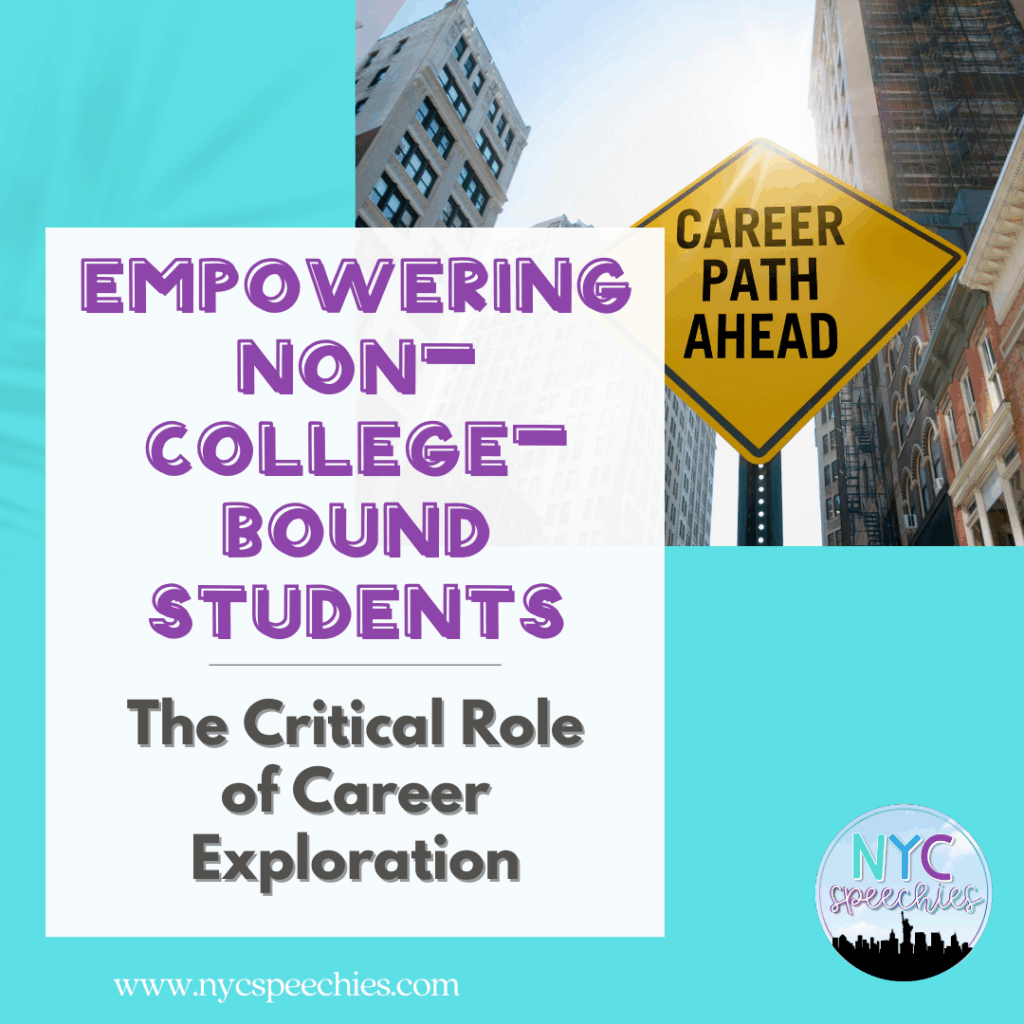
Not every student’s path leads to college – and that’s perfectly okay. For high school students who are considering alternatives to college, exploring a variety of career options becomes even more vital. As speech-language pathologists (SLPs) working with these students, we have a unique opportunity to make career exploration a meaningful and practical part of our therapy sessions.
Why Career Exploration Matters for Non-College-Bound Students

- Informed Decision-Making: Without the structure of a college path, students need to understand the wide range of careers available to them. Exploring different jobs helps them make informed choices about their futures, rather than defaulting to the most familiar options.
- Self-Discovery and Confidence: Career exploration allows students to identify their interests, strengths, and values. This self-awareness builds confidence and helps them find roles where they can thrive.
- Skill Matching: Not all careers require a college degree, but most require specific skills – many of which can be developed and highlighted during high school. Exploring different careers helps students recognize which skills they already possess and which ones they may want to develop.
- Preparation for the Workforce: By learning about workplace expectations, communication styles, and professional behavior, students are better prepared to transition smoothly into the workforce after graduation.
- Avoiding Mismatches: Trying out or learning about various careers can prevent students from entering fields that aren’t a good fit, saving time and frustration down the road.
The SLP’s Role in Career Exploration

As SLPs, our work extends far beyond speech and language. We’re uniquely positioned to help students develop the communication and social skills essential for workplace success. Here’s how career exploration can become a powerful part of therapy:
- Incorporate Career Vocabulary: Introduce and practice job-specific vocabulary, interview language, and workplace terminology in sessions.
- Simulate Real-Life Scenarios: Role-play job interviews, workplace conversations, and customer interactions to build confidence.
- Facilitate Self-Assessment: Guide students in identifying their strengths, interests, and areas for growth through structured reflection and discussion.
- Connect with Community Resources: Encourage participation in job shadowing, internships, or informational interviews to provide real-world exposure.
- Collaborate with School Staff: Work with teachers, counselors, and families to ensure students have access to career fairs, vocational programs, and other resources.

Making Therapy Sessions Count
By weaving career exploration into therapy, SLPs can help non-college-bound students:
- Build essential communication and problem-solving skills
- Develop self-advocacy and workplace etiquette
- Gain confidence in navigating job applications and interviews
- Discover fulfilling career paths that align with their unique strengths
Every student deserves the chance to find a career that matches their interests and abilities, regardless of whether college is part of their journey. As SLPs, we can play a pivotal role in guiding high school students through the process of career exploration, equipping them with the tools they need for a successful and satisfying future.