Why SLPs Should Prioritize Tier 2 Vocabulary with Older Students
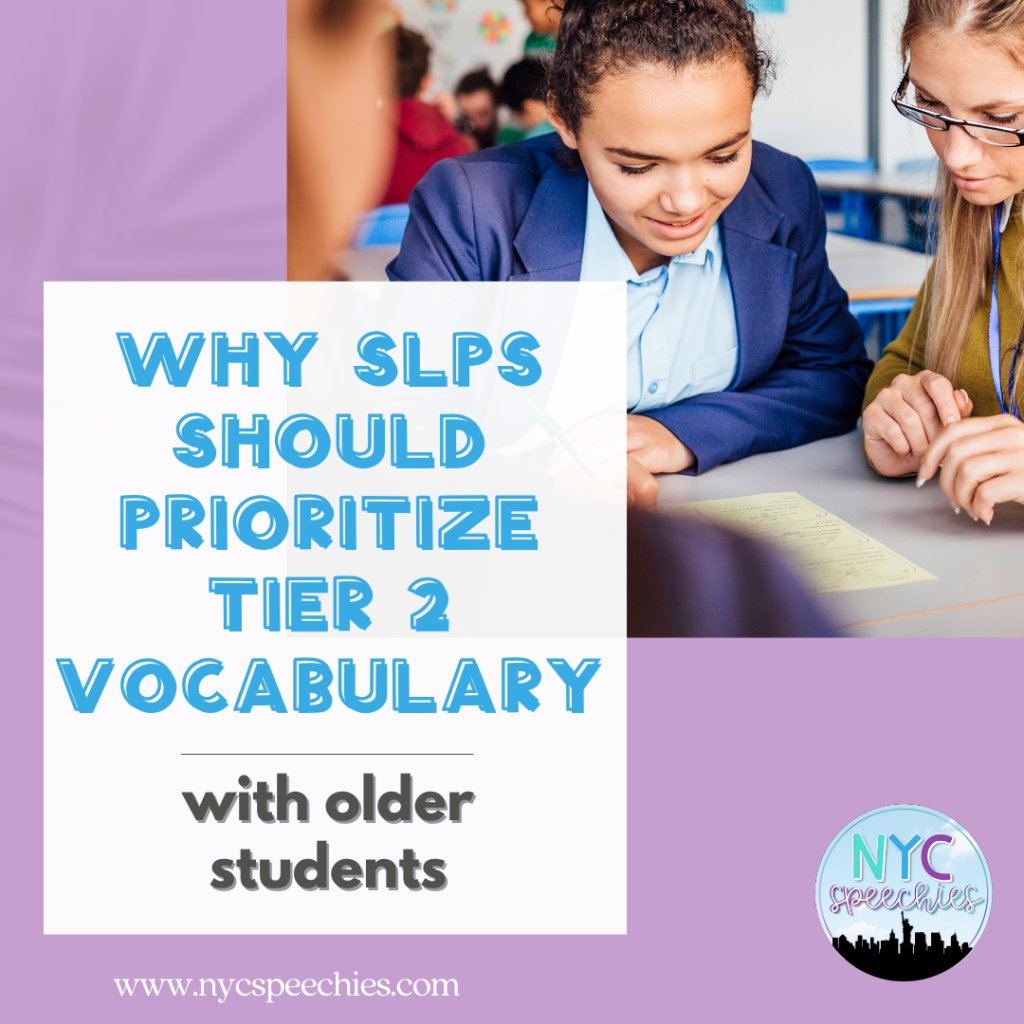
As speech-language pathologists (SLPs), we know that vocabulary is the foundation for academic success, social communication, and lifelong learning. When working with older students, it’s easy to assume that vocabulary instruction is best left to the early grades, but research and classroom experience tell a different story. Focusing on Tier 2 words with older students is not only appropriate, it’s essential.
What Are Tier 2 Words?
Tier 2 words are high-frequency words that occur across a variety of domains and are crucial for reading comprehension and academic achievement. Unlike Tier 1 words (basic, everyday vocabulary) or Tier 3 words (subject-specific terms), Tier 2 words are found in written texts, classroom discussions, and standardized tests across all subject areas. Words students will come across in multiple subjects include analyze, contrast, establish, predict, and infer
Why Focus on Tier 2 Words with Older Students?

1. Academic Success Depends on Tier 2 Words: Older students encounter Tier 2 words in textbooks, assignments, and assessments across all subjects. Understanding these words is key to following directions, grasping complex concepts, and expressing ideas clearly.
2. Vocabulary Bridges Everyday and Academic Language: Tier 2 words help students move from conversational language to the more sophisticated language required in academic settings. This bridge is vital for students who struggle with language or who are English language learners.
3. Vocabulary Gaps Persist Into Adolescence: Many older students (especially those with language disorders) continue to have gaps in their vocabulary knowledge. Explicit instruction in Tier 2 words can close these gaps and boost confidence.
4. Vocabulary Supports Higher-Order Thinking: Words like “evaluate,” “summarize,” and “justify” are embedded in critical thinking tasks and test questions. Mastering these words empowers students to tackle more complex assignments and participate meaningfully in discussions.
5. Tier 2 Words Appear in Real Life: These words aren’t just for the classroom. They show up in job applications, interviews, and everyday problem-solving situations, making them practical and relevant for life beyond school.
How SLPs Can Target Tier 2 Vocabulary

- Integrate Tier 2 words into therapy goals and activities: Make Tier 2 vocabulary a specific focus within your therapy objectives. Instead of only targeting articulation or language structure, write goals that address the comprehension and use of Tier 2 words relevant to your students’ academic and social needs.
- Pre-teach and reinforce these words before students encounter them in class: Give students a head start by introducing Tier 2 vocabulary before they see these words in classroom assignments or readings. This proactive approach boosts confidence and comprehension.
- Use context-rich activities like reading passages, discussions, and writing tasks to help students understand and use Tier 2 words: Learning vocabulary in isolation isn’t as effective as learning it in meaningful contexts. Embed Tier 2 words in reading activities where students can see and use them naturally. You can also use texts from the students’ classrooms and help them identify and define Tier 2 words.
Prioritizing Tier 2 vocabulary instruction with older students is a powerful way to support their academic, social, and future career success. Making Tier 2 words a regular part of your therapy sessions, you’re giving students the tools they need to thrive in school and beyond.
What are your favorite strategies for teaching Tier 2 words to older students? Share your ideas in the comments below!